


Asafa Jalata is Professor of Sociology, Global Studies, and Africana Studies at the University of Tennessee, Knoxville. His teaching and research expertise focuses on the areas of Oromo studies, global studies, development and international inequality, social movements, nationalism, terrorism studies, indigenous studies, human rights, and race and ethnicity. Professor Jalata’s undergraduate and graduate courses include Africana Studies, Global Studies, Sociology of Development, Comparative Poverty and Development, Human Rights in the Modern World System, The Modern World System, Comparative Studies in African American and African Studies, Race and Ethnicity, Black Communities in Urban America, and Advanced Studies in Political Economy. His research concentration has been on Oromia, the Oromo country, and its interactions with Ethiopia and the modern world system. Jalata’s most recent book is entitled Contending Nationalisms of Oromia and Ethiopia: Struggling for Statehood, Sovereignty and Multinational Democracy (Global Academic Publishing of Binghamton University, 2010). Recently he has been shifting his research toward examining the relationship between globalization and human rights violations and the impacts of terrorism from state and non-state actors. He is currently engaged in writing a book entitled 9/11 and Phases of Terrorism in the Age of Globalization: From Christopher Columbus to Osama bin Laden. His research also focuses on human rights and indigenous issues on the global level. Professor Jalata has published and edited eight books and authored sixty refereed articles in regional and international journals and several book chapters. For further information, see
http://works.bepress.com/asafa_jalata/;
http://quest.utk.edu/2010/asafa-jalata/
RECENT PUBLICATIONS
Books
2012
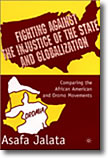
Fighting against the Injustice of the State and Globalization: Comparing the African American and Oromo Movements, New York: Palgrave Macmillan. Reprinted in paperback, 2012 [2001].
2010
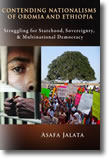
Contending Nationalisms of Oromia and Ethiopia: Struggling for Statehood, Sovereignty, and Multinational Democracy, (Binghamton: Global Academic Publishing, Binghamton University, State University of New York).
2007
Oromummaa: Oromo Culture, Identity and Nationalism, (Atlanta, GA: Oromia Publishing Company).
2007
Africa up to Sixteenth Century: Introduction to African Studies, edited with Perry Kyles and Addisu Tolesa, (Boston: Pearson).
2007
Africa since the Sixteenth Century: Introduction to African Studies, edited with Perry Kyles and Addisu Tolesa, (Boston: Pearson).
2005
Oromia & Ethiopia: State Formation and Ethnonational Conflict, 1868-2004, (Lawrenceville, NJ: The Red Sea Press).
Articles in Refereed Journals
2011
“The Oromo in Exile: Creating Knowledge and Promoting Social
Justice,” Journal of Societies without Borders/Sociologists without Border/Sociologos Sin Fronteras: Human Rights & the Social Sciences 6: 1, June, 33-72.
2011
“Terrorism from Above and Below in the Age of Globalization,” SociologyMind, vol. 1, no. 1, pp. 1-15.
2011
“Imperfections in U.S. Foreign Policy toward Oromia and Ethiopia: Will The Obama Administration Introduce Change? The Journal of Pan African Studies, vol.4, no.3, March 2011, pp. 131-154.
2011
“Oromian Urban Centers: Consequences of Spatial Concentration of Power in Multinational Ethiopia, Journal of Oromos Studies, Vol. 17, No. 2, January 2011, pp. 39-74.
2010
“The Ethiopian State: Authoritarianism, Violence and Clandestine Genocide,” The Journal of Pan African Studies, vol. 3, no.6, March, pp. 160-189.
2010
“The Tigrayan-led Ethiopian State, Repression, Terrorism and Gross Human Rights Violations in Oromia and Ethiopia,” Horn of Africa, Vol. Xxviii, pp. 47-82.
2010
“Conceptualizing and Theorizing Terrorism in the Historical and Global Context,” Humanity and Society, Vol. 34 (November): 317-349.
2009
“Being in and out of Africa: The Impact Duality of Ethiopianism,” The
Journal of Black Studies, 40: 189-214.
2009
“The Duality of Ethiopianism and its Impacts on Oromo society, “Vital Issues: The Journal of African American Speeches, Volume XVIII, No.1, pp.22-30.
2008
“Struggling for Social Justice in the Capitalist World System: The Cases of African Americans, Oromos, Southern and Western Sudanese,” Social Identities: Journal for the Study of Race, Nation and Culture, Vol. 14, No. 3, May, pp. 363-388.
2008
“Foundations of a State in Oromia: Applying Gadaa Principles in the Twenty First Century,” The Journal of Oromo Studies, Volume 15, Number 2, July : 133-189.
2007
“Ethiopia on the Fire of Competing Nationalisms: The Oromo People’s Movement, the State, and the West,” Horn of Africa, Vol. xxv, pp. 90-134.
2007
“The Place of the Oromo Diaspora in the Oromo National Movement: Lessons from the Agency of Old African Diaspora in the US,” The Northeast Journal of African Studies, Volume, 10:2, pp. 131-160.
2007
“Oromo National Political Leadership: Assessing the Past and Mapping the Future,” The Journal of Oromo Studies, Vol. 14, No. 1, February/March, (With Harwood Schaffer), pp. 79-116.
2006
"The Impact of Ethiopian State Terrorism and Globalization on the Oromo National Movement,” The Journal of Oromo Studies, Vol. 13, nos. 1 & 2: 19-56.
2005
“State Terrorism and Globalization: The Cases of Ethiopia and Sudan,” International Journal of Comparative Sociology; vol. 46 (1-2): 79-102.
Contact Information
Department of Sociology
901 McClung Tower
Knoxville, TN 37996
Phone: (865) 974-7027
Fax: (865) 974-7013
Email: ajalata@utk.edu
Books
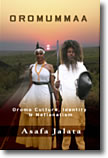
Oromummaa: Oromo Culture, Identity and Nationalism
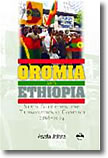
Oromia & Ethiopia: State Formation and Ethnonational Conflict, 1868-2004,
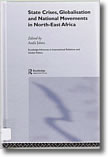
State Crises, Globalization, and National Movements in the Northeast Africa
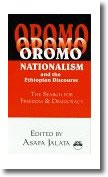
Oromo Nationalism and the Ethiopian Discourse: The Search for Freedom and Democracy