| Trinh Lab |
| Home | Research | Team | Publication | Download | Position | News |
 |
Trinh’s research interests span systems and synthetic biology, artificial intelligence/machine learning (AI/ML), metabolic engineering, biochemical engineering, and microbial and viral physiology. His research aims to advance the fundamental understanding of complex cellular systems and to develop novel experimental and computational tools to control these systems for biotechnological applications, organized into three research thrusts. Thrust 1 is to develop the transformative ModCell (Modular Cell) technology, to engineer modular (chassis) cells for predictive and scalable biomanufacturing. Thrust 2 is to develop the transformative ViPaRe (Virulent Pathogen Resistance) technology to effectively combat multidrug-resistant pathogens. Thrust 3 is to understand the mechanisms of cellular robustness against environmental and genetic stressors and develop effective strategies to boost cellular robustness for applications ranging from disease prevention to novel biocatalysis. Trinh serves as the PI on both individual and collaborative funded projects, including the NSF CAREER award for the development of ModCell technology, DARPA’s FYA and Director Fellowship awards for the development of ViPaRe technology, and several NSF, DoD, and DOE awards to understand and harness cellular robustness. Keywords: Metabolic Engineering, Synthetic Biology, Systems Biology, Artificial Intelligence/Machine Learning, Transcriptomics, Proteomics, Metabolomics, Fluxomics, Lipiomics, Biochemical Engineering, Computational Biology, Metabolic Network Modeling, Optimization, Functional Genomics, Cell Physiology, Cell Metabolism, Viral Physiology, Cellular Robustness, CRISPR-Cas, CRISPR-Cas Antimicrobials, CRISPR-Cas Antifungals, CRISPR screen, Biotechnology, Biomanufacturing, Biofuels, Biochemicals, Biomatericals, Modular Cell Engineering, ModCell, CASPER, Escherichia coli, Bacillus coagulans, Bacillus sp., Yarrowia lipolytica, Candida albicans, Candida auris, Candida sp. |
| Topic 1. Rewiring Cellular Metabolism: Mechanisms and Tools |
A metabolic network describing cellular metabolism typically contains hundreds to thousands of reactions catalyzed by functional enzymes that convert substrates into precursor metabolites used for cell synthesis and other metabolites secreted into extracellular environments. These functional enzymes are directly encoded by functional and regulatory genes that determine cell phenotypes. Through metabolic network modeling, we can decompose a complex metabolic network into unique pathways, each of which contains a minimal set of enzymatic reactions required to support cell functions. Each of these independent pathways can represent physiological states of cell operation. A comprehensive understanding of these pathways allows the selection of cell phenotypes of interest, thereby establishing a basis for designing cells with optimized metabolic functionalities. The engineered cells can be rationally designed, constructed, and validated to function through the most efficient pathways to produce target products (e.g., chemicals, fuels, and materials). The Trinh lab is particularly focused on understanding and harnessing the modularity of complex biological systems for predictive and scalable biomanufacturing of chemicals, fuels, and materials (Figure 1). We are developing the transformative ModCell technology that enables rapid development of optimal production strains in a plug-and-play fashion to produce a broad range of biomolecules, including biofuels, biochemicals, and biomaterials from renewable feedstocks (e.g., lignocellulosic biomass) or wastes (e.g., mixed plastics wastes, CO2) as well as high-value products such as fine chemicals, secondary metabolites, and enzymes. These production strains are assembled from a universal modular (chassis) cell and different production modules based on modular cell design principles. |
|
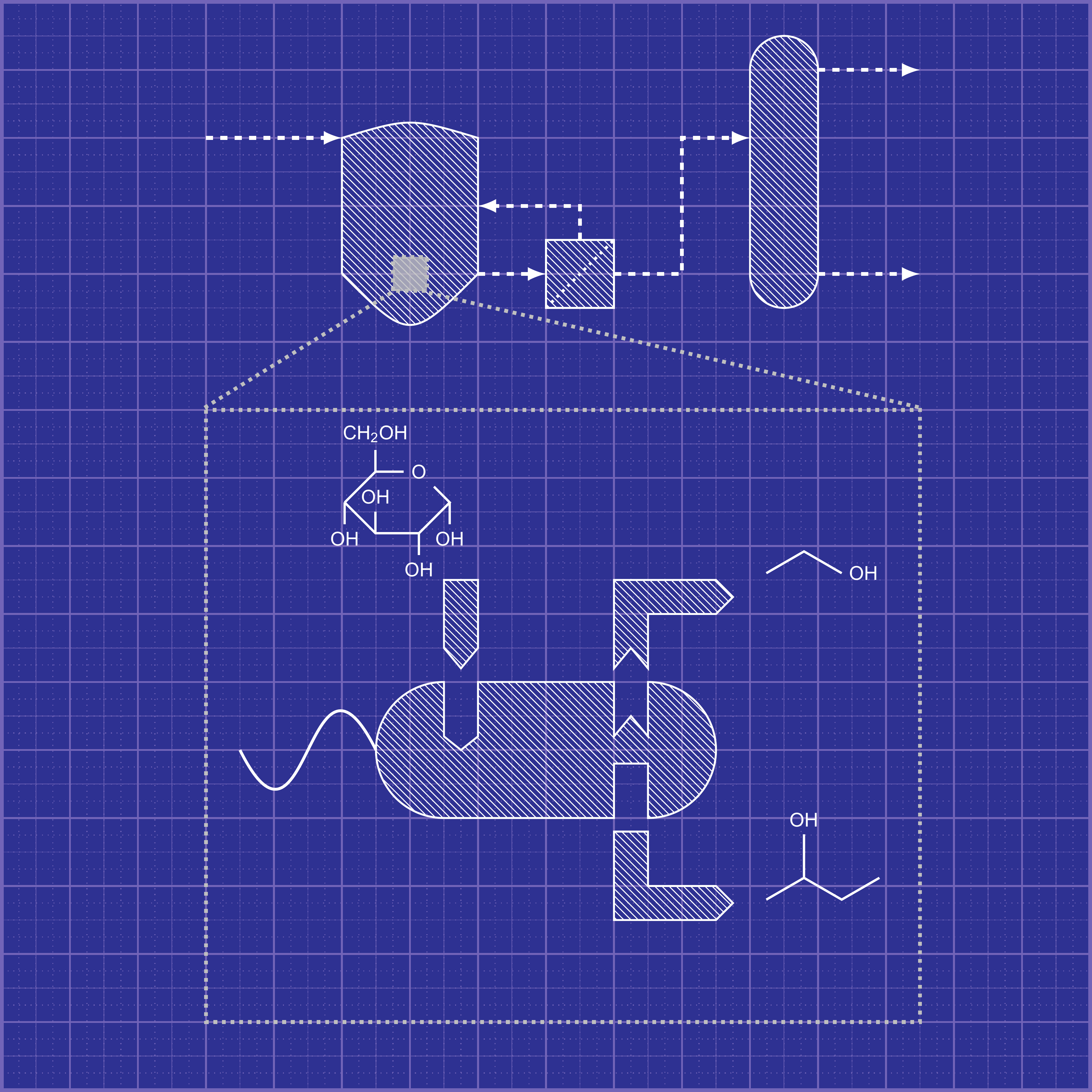
Figure 1: Blueprint of Modular Cell Design |
We are developing the following computational tools: (1) MMF (Minimal Metabolic Functionality): This tool identifies a minimal set of gene deletions required to achieve high production of target molecules. (2) SMET (Systematic Multiple Enzyme Targeting): This tool combines structural and dynamic modeling to systematically identify target enzymes and their levels of up- or down-regulation to enhance the production of target molecules. (3) ModCell (Modular Cell): This tool designs optimal modular cells that can couple with exchangeable production modules to build modular microbial cell factories in a plug-and-play fashion for the efficient production of target molecules. We are applying these tools to construct and characterize microbial biotransformation platforms including bacteria (Escherichia coli, Clostridium thermocellum, Bacillus coagulans) and yeasts (Saccharomyces cerevisiae, Yarrowia lipolytica, and Candida species) for the biosynthesis of a broad range of molecules such as esters used as flavors, fragrances, solvents, and biofuels. Funding sources: The U.S. National Science Foundation; The U.S. Department of Energy. |

| Topic 2. Engineering Cellular Robustness: Mechanisms and Tools |
One of the major challenges in converting lignocellulosic biomass or wastes (e.g., agricultural residues, plastics) into biofuels, biochemicals, and biomaterials is to develop robust solventogenic microorganisms that can tolerate chemical inhibitors present in the fermentation broth. These inhibitors can be generated during pretreatment, enzymatic hydrolysis, and fermentation. Depending on the bioprocess, inhibitors can be weak organic acids (e.g., succinic acid, lactic acid, acetic acid, formic acid), furan derivatives (e.g., furfural, hydroxyl methyl furfural), phenolic compounds derived from lignin, organic solvents derived from pretreatments (e.g., ionic liquids), and/or fermentative products synthesized by microorganisms (e.g., alcohols, aldehydes, carboxylic acids, and esters). These inhibitors have a detrimental effect on biocatalyst performance by decreasing both cell growth and solvent production. Engineering microorganisms to become resistant to these chemical inhibitors is difficult because the genotype-phenotype relationships underlying chemical resistance are complex and often remain poorly understood. |
|
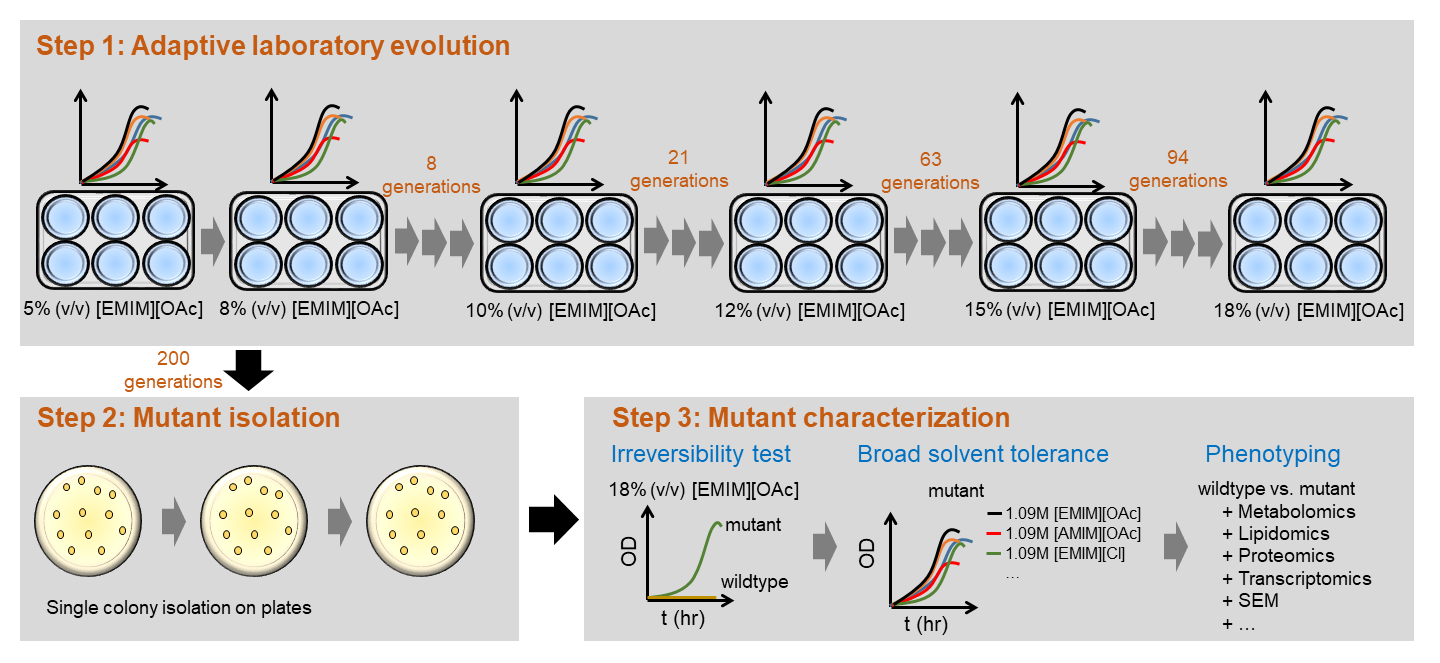
Figure 2: Pipeline of adaptive laboratory evolution and genome-wide analysis to understand and optimze cellular robustness |
To engineer cellular robustness, the Trinh lab has applied and developed various genome engineering tools. One such tool is gene swapping and amplification, which is designed to transfer novel phenotypes from poorly characterized microorganisms exhibiting high resistance to chemical inhibitors to an engineered host. Another approach is based on classical but effective adaptive laboratory evolution (Figure 2). In parallel, the Trinh lab is also interested in developing and applying novel omics tools to elucidate the genetics and underlying mechanisms enable cellular robustness through systems-wide analysis for example CRISPR screen. |
Funding sources: The U.S. National Science Foundation; The U.S. Department of Energy. |
| Topic 3. Engineering Modular Ester Fermentative Pathways: Design Principles and Tools |
Developing an efficient and robust whole-cell biocatalyst to produce a target chemical requires the recruitment of heterologous genes to constitute a synthetic metabolic pathway. Even though advances in recombinant DNA technology have provided powerful and convenient molecular biology tools to transfer genes among species, optimizing the compatibility between synthetic metabolic pathways and their host microorganisms remains challenging due to imbalanced metabolic fluxes not only within the synthetic metabolic pathway but also in the associated native pathways. This imbalance results in the accumulation of intermediates that are toxic to cells, thereby inhibiting cell growth and decreasing the production of the target metabolite. The Trinh lab is interested in developing novel platforms to efficiently and rapidly design and optimize the performance of synthetic operons that can dynamically control metabolic fluxes through synthetic and native metabolic pathways for enhanced product formation in engineered cells with high compatibility. We are currently exploring a large space of novel pathways for combinatorial microbial biosynthesis of esters used as flavors, fragrances, solvents, and biofuels (Figure 3). |
|
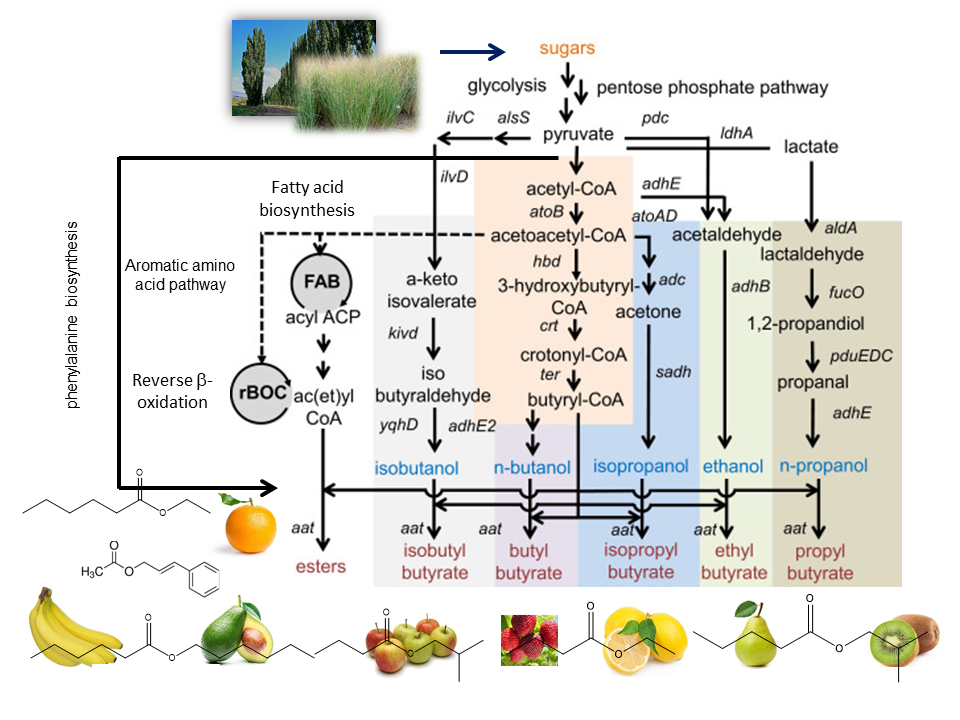
Figure 3: Metabolic pathway platform for biosynthesis of butyrate esters |
Funding sources: The U.S. National Science Foundation; The U.S. Department of Energy. |
| Topic 4. Directed Metabolic Pathway Evolution: Mechanisms and Tools |
An optimized cell designed to couple cell growth with the operation of a target pathway can be utilized as a useful host to conduct in vivo metabolic pathway evolution because cell growth is inhibited in the absence of the target pathway. The basis for selecting evolved pathways is the growth-coupled product formation phenotype, which is easy to implement. |
|
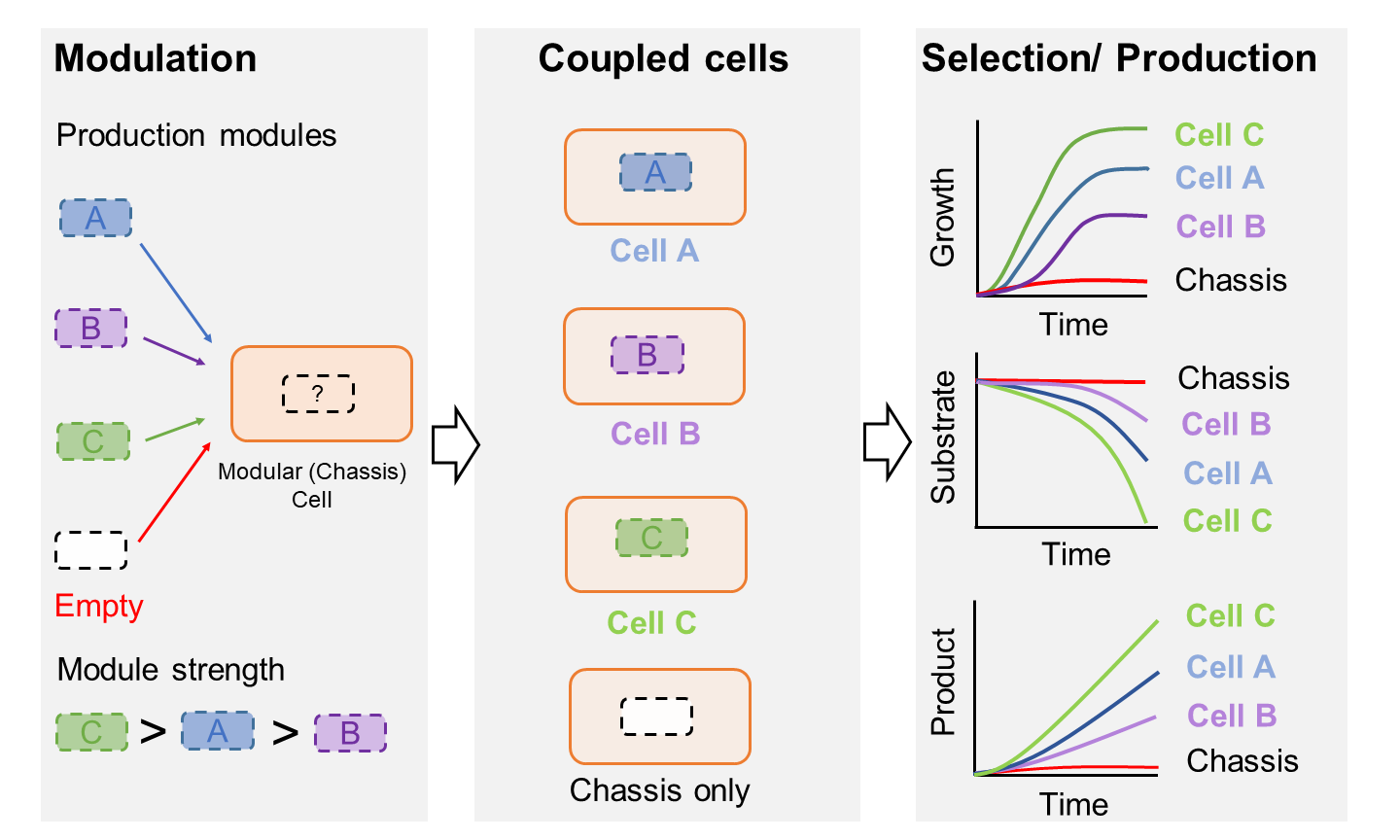
Figure 4: Directed metabolic pathway evolution using ModCell design |
We are exploring this approach using our ModCell technology to improve titers, yields, and productivities for microbial production of biofuels, biochemicals, secondary metabolites, and enzymes. With this approach, in vivo metabolic pathway evolution can be implemented by replacing the enzyme of a reaction within the target pathway with a potential candidate from a library of mutated enzymes or from different microorganisms with similar or related functions (Figure 4). Only cells containing functional complementary enzymes can support cell growth. These candidates can be selected by using advanced cell-culturing techniques such as a cytostat, turbidostat, and/or CO2-stat. With these selection methods, only host cells containing enzymes with high activities are enriched. In parallel, we are interested in better understanding the underlying mechanisms of molecular pathway evolution resulting in desirable phenotypes by using systems-biology tools, thereby discovering novel genotype-phenotype links to guide inverse metabolic engineering. Funding sources: The U.S. National Science Foundation; The U.S. Department of Energy. |
| Topic 5. Combating Antibiotic Resistance: Mechanisms and Tools |
Multidrug-resistant pathogens pose a grand challenge to human health, wildlife, agriculture, and the environment. In the war against virulent, resistant, and rapidly evolving pathogens, defensive measures must be developed quickly and remain readily modifiable to counter the rapid and unpredictable evolution of resistance. The current paradigm relies on small-molecule discovery technologies that are unable to scale their development and deployment rapidly enough to counter pathogens capable of rapidly adapting to neutralize existing treatments. To address this challenge, we seek to elucidate and develop CRISPR-Cas systems as antimicrobials to neutralize pathogens (Figure 5). In parallel, we develop CRISPR screening tools to identify genetic targets underlying pathogen robustness and resistance to antibiotics or stressors in complex environments, thereby enabling the development of precision therapeutics to neutralize pathogens. |
|
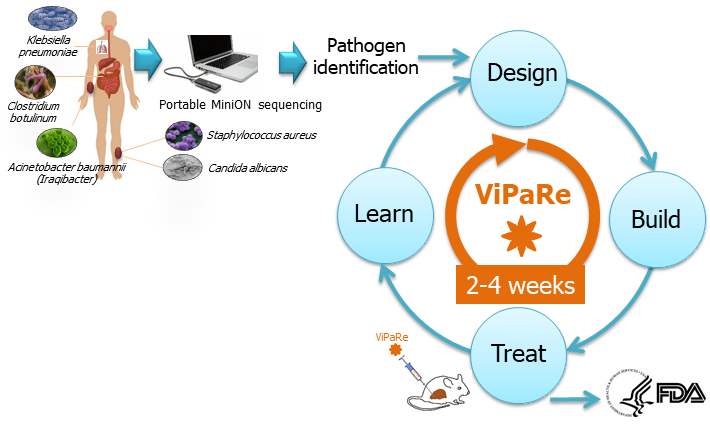
Figure 5: ViPaRe technology |
We are developing the following computational tools: CASPER (CRISPR Associated Software for Pathway Engineering and Research): This tool enables gRNA designs for any organisms and Cas enzymes of interest. It also contains novel features for analyzing multiplexing, multitargeting, multipopulation, and PAMs. CRISPR-GRIT (Guide RNAs with Integrated Repair Templates): This tool enables Precise Multiplexed Genome Editing in the Diploid Fungal Pathogen. |
Funding sources: The U.S. Department of Defense. |
| Updated on 06.27.2026 |  |