Well, here we are at Year 6. We get a good chuckle every time we think that our original estimate was 2, maybe 3 years at the outside. There were a lot of things we didn't know when we started which resulted in more work than we anticipated. Also, our idea of what a simple cottage is has expanded so that is a factor as well.
Our original plan for this year's work was to concentrate on work that did not involve as much money or labor and to enjoy the water more. Last year, we concluded our narrative with:
"Our plan is to get the utilities connected right at the start of the month and spend all our time in our cottage, alternating working days and half-days with play days. Although we are not finished yet, the light has come on at the end of the tunnel and we are looking forward to a more leisurely work pace and more time with the kids next year."
So as early spring came, we talked about some less time-consuming tasks, like getting some fill dirt to go in low spots in the yard, painting and performing minor inside finish work, and getting the plumbing and electrical completed. However, on the trip east, we decided to go ahead and bite the bullet and put in the south-facing dormers, finish out the bathroom, and then do whatever there was time for. The original plans did not call for south-facing dormers but when the wind is from that direction, the breeze is needed the most so last year, we concluded we would add them. We knew this was going to be a big job; dormers take us about 5 days a piece of very hard, very hot work. However, not having the dormers in would mean that the finish roof would be delayed which would delay the ceiling, etc. We did spend more time playing with the kids this year, but the pace of the work was not a leisurely one.
First of all, we needed the plumbing and electrical to get the Certificate of Occupancy, or "CO". This is a very valuable piece of paper, without which you do not have a cottage, but a project, and we could not legally stay in the cottage without it. This is issued by the building inspector after all the major components of the house have been completed and verified to have been done correctly. These are divided into categories, like Electrical, Plumbing, Construction, Mechanical, etc. Each category has several elements that need to be verified at various phases of the project. For example, under "Construction", you have Footings, Foundation, Framing, Insulation, etc. There is an obvious order in which things need to be checked off by the building inspector. The reinforcement for the footing has to be inspected before the concrete is poured, the concrete has to be inspected before the foundation is laid, etc. Some things can be inspected at one time, like the plumbing and electrical "rough-in" (the part that is behind the wall).
The building inspector plays a critical role here, as you might imagine. On the one hand, his/her job is to verify that the work is done correctly. If you have hired contractors to do your work, you definitely want the inspector to be picky because you have already contracted a price for your house and it will cost the same if the contractor or subcontractors do a poor job or a good one. The inspector therefore has a protective role for the home owner. The relationship between the contractor and the inspector is a different one however. It is the inspector that determines if it is OK to go on to the next step. If the inspector is busy and can't get to the job site for several days, it holds up the job and costs the contractor time. If something is not done in accordance with the building code, it has to be redone, probably at considerable expense which the contractor has to bear. With owner/builders like us, the relationship is somewhere in the middle, but more similar to the relationship with the contractor. We usually felt like we had a good idea of what had to be done and how to do it and the inspections tended to slow us down. Also, when we started this summer, we found that the building inspector had changed again, and we were on the fourth one. The official building code is hundreds of pages, specifying every minute detail of construction and it is impossible for any inspector to be familiar with every aspect. As a result, each inspector has his/her pet issues and as the inspector changes, the relative importance of difference aspects changes also. Because we were building inside the 100 year flood plain (the imaginary boundary inside of which it has been determined somehow that you can expect to get standing floodwaters on average every 100 years) and in a region subject to hurricanes, there were additional constraints on building that led to additional work. These restrictions are usually entirely reasonable, but were a source of annoyance when we ran into one we didn't know. For example, the foundation vents must allow for floodwater to go in and out freely and you must have a certain total area (a square inch for every square foot of house planform area) and it has to be arranged in a certain way around the house. Well, after you have your house sitting on the foundation and your vents installed, it is a bad time to find this out, even if it is probably eventually to your advantage to comply with this. We actually had this issue and it is a long story, but briefly, we had to make some last minute changes to make our foundation meet the code for the zone in which we were building. We had to remove the guts of our expensive, automatic vents to allow them to let water in and out freely and had to build the crawlspace door so that it swings in and out and is hinged on the top.
This year, we took a long delayed trip to Washington, DC for a couple of days at the very end of June and arrived at the cottage on July 1st.
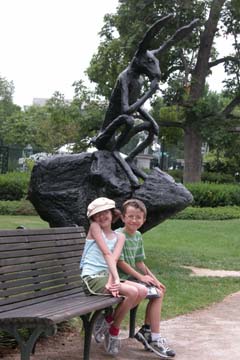
Fiona and Gareth in front of "Thinker on a Rock" in the National Gallery of Art Sculpture Gallery.
Previously, Paul had made an early 3 day June trip to the cottage to finish the electrical work. The electrical breakers needed to be put in the breaker box and the outlets, lights and receptacles had to be installed. A very good friend, Charlie Gibson foolishly volunteered to be the boss on this job. Charlie is an excellent electrician (also an owner of an electrical and controls installation company) but most of his direct experience was with commercial installations so it was a learning experience for all of us. Charlie works like a man possessed and in no time at all we had the electrical finish work essentially finished, less a few minor details.

Charlie, a family friend, installs the panel wiring in early June. What a guy!
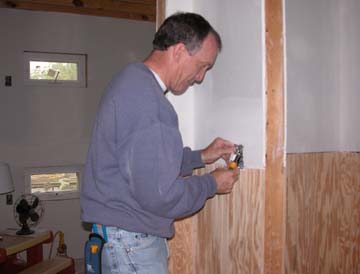
Charlie wires in a light switch.
When we started in earnest in July, the first jobs were to finish the plumbing and the minor electrical work remaining, with the objective of being able to stay in the cottage (we had been staying in Paul's mom's cottage just down the road). We started with the plumbing by running a 3/4 inch PVC line from the road to the house. Prior to this, we had the county water department install a water meter at the road. This was an easy mater, just write a check to the county for $650. Then, we rented a trenching machine to dig a ditch to lay the pipe in and connect to the meter. It is a long way from the road to the house and even with the trenching machine, getting the ditch dug through all the roots and nearly rock hard clay yard was time consuming.

Kerri runs the trenching machine for the water line.

The water line is glued up and laid in the trench, ready for covering.
On the 4th, there was a traditional barbeque and fireworks show planned. Also, Fiona had a pre-birthday party while all her cousins were around. So, as always, we suspended work for the 4th and enjoyed the food, sun, and fun.

Fiona, Gareth, Madeline and Paige await the cutting of Fiona's pre-birthday cake.
Four monkeys were caught hanging out in the mimosa tree.
Three cousins in the hammock.

Four cousins and Uncle Bill went on a sail with Paul.
One interesting addition was a family of three very young raccoons that hung out at the cottage. They were too young to be away from their mother and did not know to stay hidden in the daylight and keep away from humans. The mother had probably been killed somehow or separated from the young ones. They were fun to watch tottering around finding food, but we noticed a fox in the yard one morning as well. Later, we did not see the raccoons.
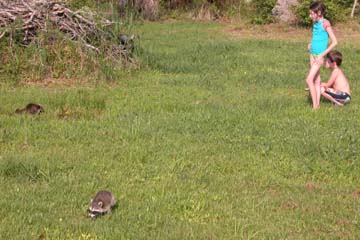
Two of the three raccoons look for food in the front yard.
After a day of pigging out on BBQ (pun intended), we returned to the cottage. The plumbing and waste systems have to pass a pressure test before the inspector will check them off. Usually, this test is done when the plumbing is roughed-in. However, we had installed fixtures and so there were many more places for leaks to occur and plugging waste lines was much more difficult. Getting the pressure test completed was nerve wracking. We failed it the first time and had to chase down the problem with the fixtures installed, which was a tedious process. The test of the supply line plumbing is that the system has to hold a pressure of 100 psi for 10 minutes. The waste system has to be capped where it exits the house and hold a level of water 6 feet above the highest fixture in the house for 10 minutes. In the end, the problems with the supply plumbing were where plastic pipe was fitted with brass fittings and a fixture was screwed into the fitting. We would advise anyone doing the same to get the pressure test done with as few fittings in place as possible and if you have to screw something together, use plenty of pipe thread tape and screw it in well. The "PEX" pipe was crimped to the fittings with brass rings and not a single crimp leaked. We borrowed a set of commercial-grade crimping pliers and would advise anyone do the same. There are cheap, non-commercial grade ones but we expect that they would not be as fool-proof as the commercial ones. With a good set of crimpers, there is about no way to go wrong. The waste system piping, which was glued-up PVC piping, actually had a pin-hole in the vent line where two fittings were glued together. It was a very small pin hole and since it was in a vent line, would not ever hold water, so would not have been a problem, likely. None-the-less, it is nice to know it doesn't leak at all.
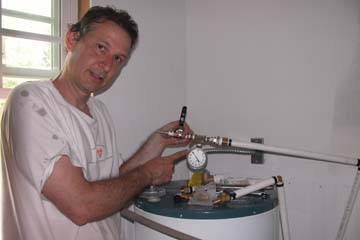
Paul checks the pressure gauge installed in the supply lines to see that they will hold pressure. After finding two leaks, they do.
After the plumbing, we turned to the electrical work. There were several steps to getting the electrical checked off. To this point, we had been on temporary power, which is a pole in the yard with a couple of receptacles. This means we had to run everything off of extension cords and could not use the house wiring. Therefore, we first had to get the power company to run the power from the road to the meter base in the breaker box. We had already done this in June before we got to the cottage. This is a very easy step; just write a $1000 check to the power company. Next, we had to get the meter set in the meter box. Before we could get that, we had to get a surveyor to verify that the floor and all electrical and mechanical equipment were 8 feet above mean sea level. We had the land surveyed when we laid out the house but, although it is hard to believe now, we never had a formal check on the foundation before we put the floor on it. There was a survey mark at 8 feet above MSL on a tree about 50 or so feet from the house and while it looked obvious that we were above it, it is very easy to be deceived about elevations. We were on pins and needles until we had the surveyor out and got his report. We would highly advise getting this checked before the foundation is poured, just to be sure. Either that, or get a survey mark right at the foundation. If we had not been above the flood plain, we would have had to jack up the house and add a course or so of blocks. After the elevation was certified, we were able to get the meter base installed (the power company does this) and we called the inspector, Carl Spruill, to check out the receptacles, lighting, smoke detectors, and other wiring. We failed the electrical test on the first try, but it was not the fault of Charlie. After Charlie had gone, we had to install more GFI breakers than we had originally (any receptacle within 6 feet of a water source has to have one) installed and we wired one in wrong. Actually, it would have lead to more protection, not less, but the result was that when one particular GFI receptacle tripped, it would trip another and the inspector did not like that.
It was a trivial problem but it took about an hour to trace down and it was after lunch on a Thursday when we were done with everything. As a result we had to wait on the inspector, who was out of the office the next day, which was a Friday. Also, the cottage is pretty far from the inspector's office and he had more to do than come and go at our beck and call.. The inspector had mentioned that he would issue our CO (Certificate of Occupancy) when he inspected the wiring again and we were anxious for that. However, we had planned to start on the dormers that weekend. We felt pretty sure that we would not be issued a CO if we were in the middle of constructing the dormers on the back when the inspector showed up. We could not decide if we should go ahead and get on with the dormers and delay the final inspection until they were finished or wait on the CO to start and view the dormers as a post-construction remodeling. We thought we'd probably have to get another permit to put the dormers in if we waited until after we had the CO so that was a point in favor of going ahead with them. However, the original plans filed with the building inspector did not have dormers on the rear and in truth, we were not sure if we were allowed to make an on-the-spot modification anyway without prior approval. We already had the framing inspection and building dormers requires a pretty major framing modification. Waiting until Monday would mean that we would have to delay the dormer work for three days and we had a month to get it all done and time was ticking. Also, the weather looked good and the dormer work starts with cutting a giant whole in the roof. Therefore, we decided to begin work on the dormers and delay the inspection on the electrical until then. We would just have to wait and see what the inspector thought of the dormers when he saw them. We hoped it would be OK because if we did not get a CO this year, we would probably be facing a different inspector next year with a different set of priorities and we did not want to get in a loop, trying to satisfy the ever-changing building inspectors. Kerri's brother, Greg, had come with us to the cottage and so for better or worse, Paul and Greg launched into building the dormers that Friday. We started on the southeast dormer because we could stand in the loft area and do most of the work from the inside. For each dormer, one rafter had to be removed and two had to be doubled. The rafters are large and heavy and we recalled the heavy, hot framing work we had done the second and third years. It started with a bad omen, a rain that started as soon as we cut a massive hole in the roof. However, that was about the only rain we had during the entire two-week process.

Greg cuts out the rafter hangers in preparation for removing the rafter in the middle of the dormer space. Had we planned for the rear dormers from the beginning, we could have framed for them from the start and avoided this step.
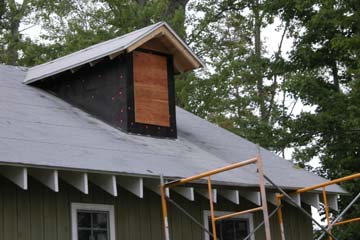
The southeast dormer is in and ready for siding.
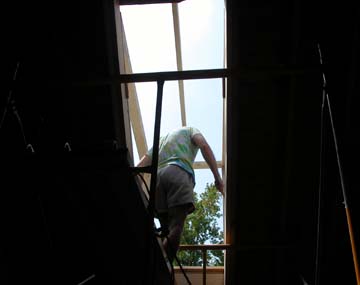
The southwest dormer was more difficult because the dormer was over the open area and work had to be done off scaffolding from the inside or the roof on the outside.
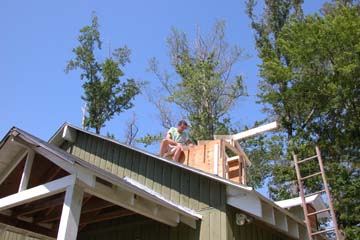
Much of the southwest dormer had to be built from the rooftop and it took longer to build. Four dormers is about all the dormers Paul has in him.
Kerri's primary projects were getting the bathroom and kids' bedroom ready for occupancy. This included painting floors and walls and hanging cabinets and mirrors. The paint scheme chosen was a shade of light green on the upper part of the wall and white on the lower part. It is difficult to get good pictures of the rooms; we really need a wide angle lens for that. In addition, Kerri broke into her stash of things she has been collecting for 6 years to decorate with and started to make the place homey.
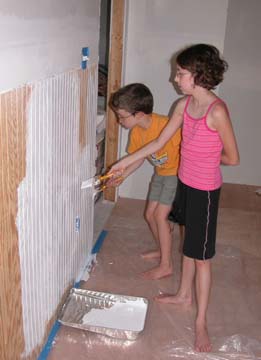
Fiona and Gareth helped paint their bedroom.

Kerri put a good grade of plywood on the kids' bedroom floor and painted it with a checkerboard pattern.

Installing the toilet or "praying to the porcelain god"? You choose.
This year, the kids stayed with us at the cottage most of the time. For the first time, they began to enjoy the Sound in the way that we had envisioned. They became a couple of fish and stayed in the water as much as possible. Part of this was due to the patience of their Uncle Greg, who played countless hours of Clam-Man. We played with them in the water as well, but Uncle Greg takes the prize for most hours in the water. When not in the water, they played make-believe games and some Nintendo games as well.
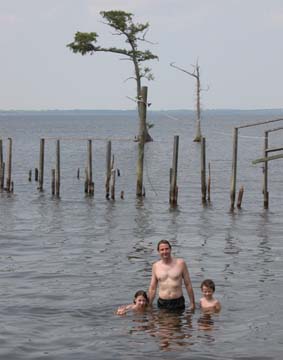
Paul and the kids in the water in front of the cottage, with the remains of an old pier from the lot next door in the background.
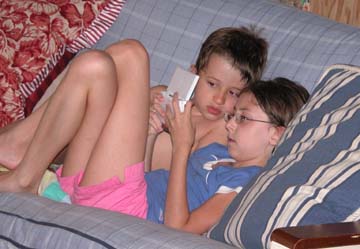
The ubiquitous Nintendo holds Fiona and Gareth in its mysterious grasp.
After a week or so of very hot and labor intensive work, we completed the dormer work. It was time to call the building inspector. He was very accommodating, coming the next morning and earlier than he said. He checked the offending GFI outlet and, finding everything in order, issued us the Certificate of Occupancy. At least officially, we now have a cottage instead of a building project!
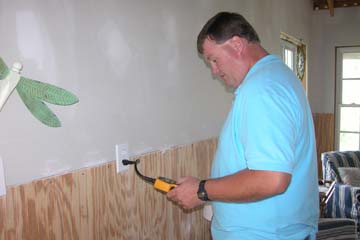
Carl Spruill, the building inspector this year, checking the outlets to be sure they are properly connected. This time, they were.
Well, time was coming to an end. It was Friday, July 27th when we got the CO. We had yet to take our traditional overnighter to Nags Head and still had several jobs to tackle before we could wrap the project up for the year. Also, Kerri was chomping at the bit to get the kids' bunk beds built. We made reservations to stay at a hotel on the ocean on Sunday night and planned to finish up work when we returned. Saturday, we mostly played with the kids and enjoyed ourselves and then Sunday morning, we drove the 1.5 hours to the Outer Banks.
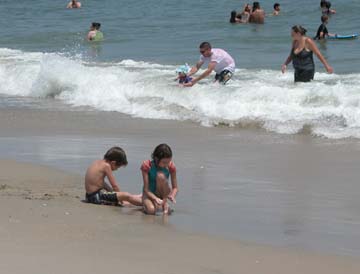
We went to Coquina Beach, where Paul used to go as a kid. The weather was perfect in spite of a poor forecast.

Gareth dug a hole big enough to bury his leg in. He could feel sand fiddlers playing with his toes.

We took the traditional early morning trip to Jockey's Ridge. It was overcast Monday, which is good weather for climbing a giant sand dune in July.
We decided to take in several attractions while in the area, in addition to the traditional bumper cars, Pirate Golf, souvenir shops, and seafood restaurants. We threw tradition (and money!) to the wind and visited the Wright Brother's Memorial and museum on the Outer Banks and then went to Manteo on Roanoke Island.. We visited the museum and the Elizabeth II, which is a replica of a 16th century ship used to take colonists and soldiers to the New World on Roanoke Island. We also went to the play, The Lost Colony, on Monday night. We drove back to the cottage late after the play.

Roanoke Island street sign where we first saw Gareth's name before he was born. This is where we actually got the idea for his name.
Tuesday morning, Kerri declared that we would finish up what had to be done to get ready to go and build the bunk beds later. Paul was glad to hear this proclamation, because the wind was blowing about 12 knots and the sky was filled with fluffy clouds. It was time to sail.
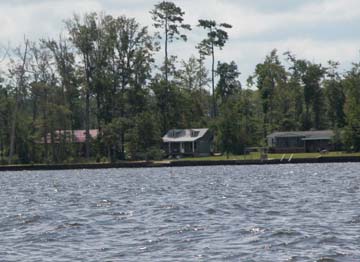
Not a great picture, but a view of the cottage as we sailed off.

Fiona rides the bow, watching for pirates. Or is she the pirate?

Paul at the tiller.
The initial sailing trip with the whole family was cut short when Gareth and Kerri got green around the gills. They returned to the dock and Paul headed off solo for a couple of hours. He enjoys tying off the tiller and sitting on the bow. The boat will sail itself for hours, finding its own way through the wind and waves.
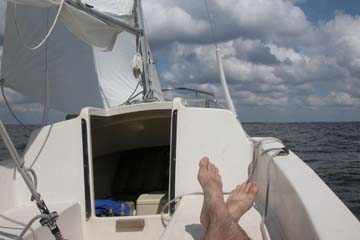
Looking forward from the stern.

From the bow looking back, tiller tied amidships.
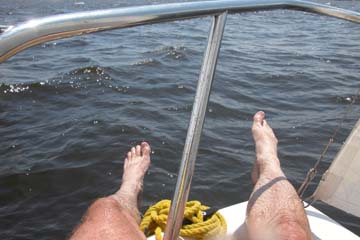
Riding the bow as the boat self-steers is the way to go.

The traditional up-the-rig shot. The sail was reefed because it was gusty.
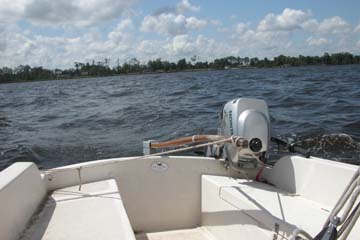
Another view of the waterfront along the south shore of the Sound by our cottage.
After sailing, we set to work cleaning up the cottage for a celebratory dinner and our first legal night in the cottage. We had Paul's mother, sister, niece, and David over for a dinner, provided mostly by Bojangles (they have the best sweet tea).
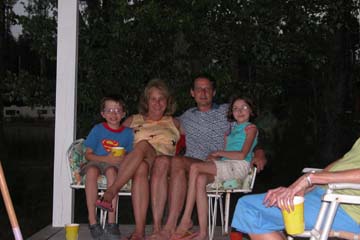
A family portrait on the glider on the porch.
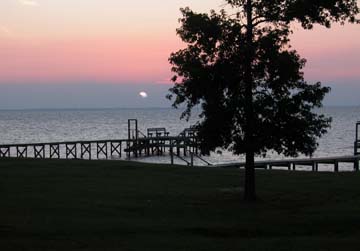
The sunset that evening from the front porch.
That night, we stayed in the cottage for the first time this year. We woke to a beautiful morning.

Fiona and Gareth huddle beneath the covers for a couple extra minutes of snooze time.
We spent the next day, August 1st, trying to finish the few remaining chores and clean up to head back to Knoxville. It took longer than we thought and didn't finish until nearly dark and so we ended up spending the night with Paul's mom. Before we left, Kerri took a series of pictures of each room in the cottage. We post them below so you can get a feel for how we left it this year.
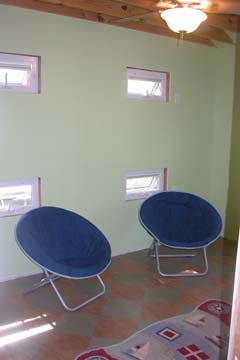
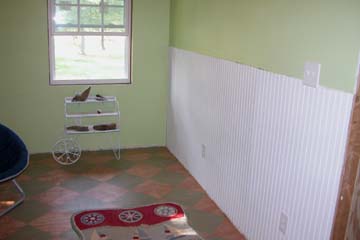
The kids' room (two different views).


The loft area (mostly storage space now).

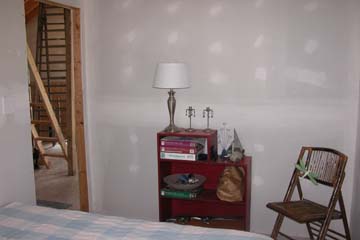
Our bedroom (two views).
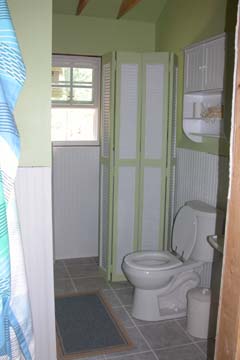

The bathroom (not a great view but you can see the color scheme for the cottage here).
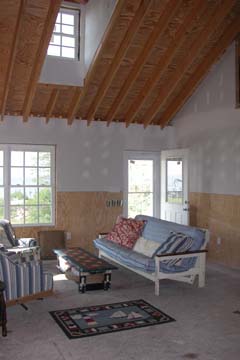
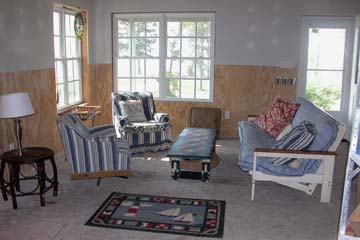
The living room (high view showing underside of roof and level view).

Kitchen area.
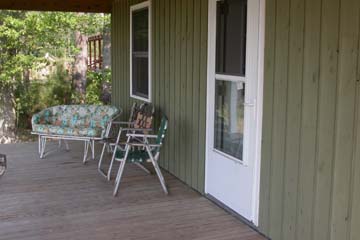

Porch (east end, left, and west end, right)

Front view.
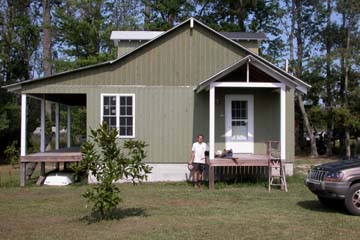
View of the west side, looking east.
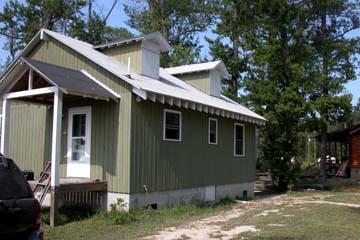
Rearview, with new dormers (windows not yet installed).
And that is how we left it, glad to be headed back home but also feeling like we are deserting a friend. It is hard to believe it will be nearly a year before we see it again. To be truly finished, we have a good deal of painting to do, the finish roof has to go on, the ceiling needs to be put in, the steps have to be built, and the floors need to be put in several rooms. That is certainly a lot to do. However, it is perfectly habitable as it is, and it is legal to do so now. We have more leeway about when to do what jobs and, importantly, we are done with inspections. We have hot and cold water, a shower, toilet, and kitchen and bathroom sinks. We have lights and receptacles. Next year, we will start out occupying our cottage and we will be able to enjoy the water and wind even more.
With this installment, we complete the web saga. It has been nice to have a place to document our yearly discoveries and work. I hope people have enjoyed it. Perhaps we will summarize major future projects for the interested, a few season-end pictures to summarize major improvements. Any house is a work in progress and its construction may never be complete. We are already imagining major future upgrades, like extending the porch to the east end and adding a gabled awning above the west end window to protect against blowing rain.
We hope everyone gets a chance to have or visit a special place, where the modern world can be left behind for a while, you can be outside and enjoy the world, and family and friends can meet over good food and drink.